
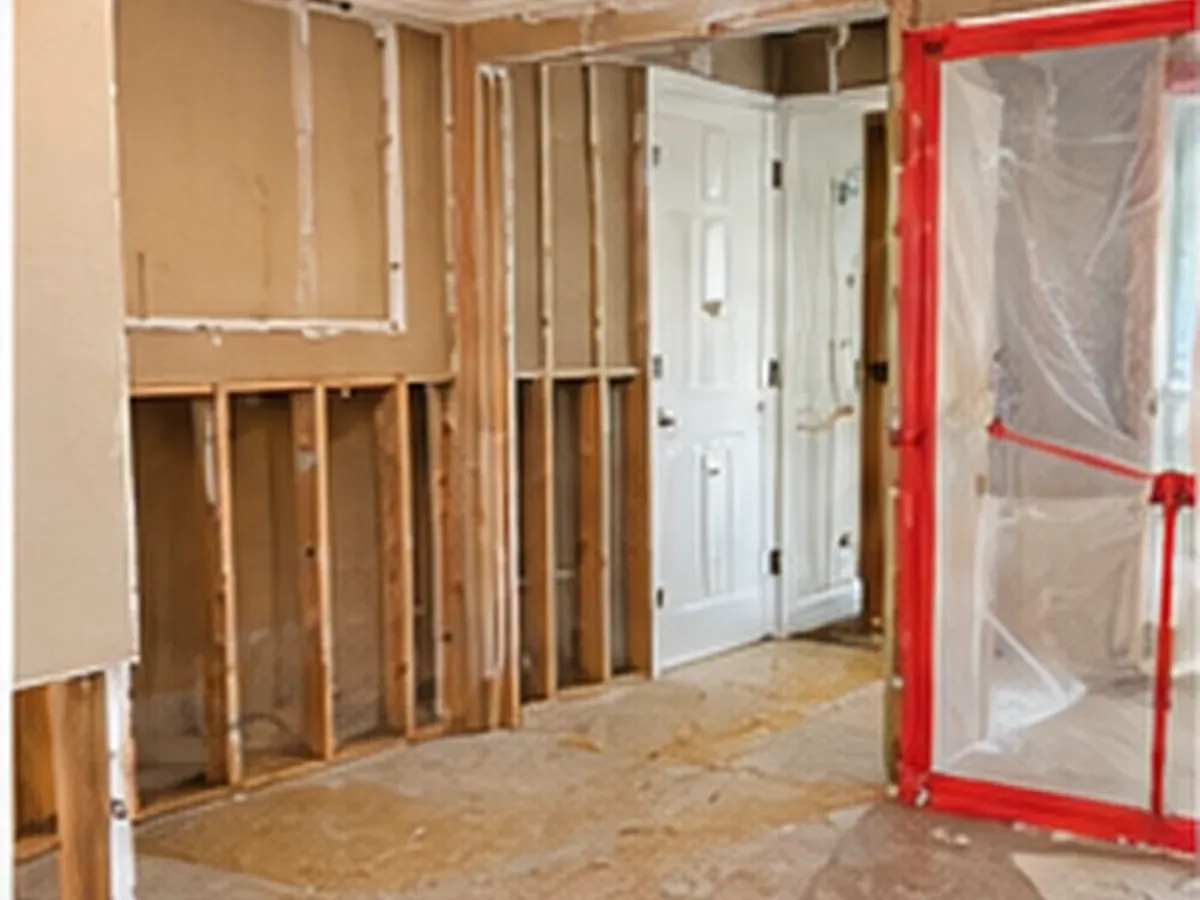
The machines leave, but the wall is still open. That does not necessarily mean the cleanup was unfinished. Mitigation and rebuilding answer different questions, and the handover between them should explain exactly what has been completed and what remains.
What matters most
- Mitigation controls the loss and addresses affected materials.
- Reconstruction replaces finishes after source and drying decisions are settled.
- The handover needs room labels, retained-material findings and a clear repair boundary.
Mitigation controls the immediate loss
Extraction, affected material decisions, cleaning and drying may belong to the mitigation scope. The aim is to address the water and retained assemblies. That contract may not include putting back drywall, trim, flooring or paint.
Ask for a completion record identifying removed materials, retained areas and the findings supporting the end of equipment use. A final room photograph is helpful but does not replace the work history.
Rebuilding needs a starting condition and a boundary
The repair contractor should understand the source correction and drying findings before closing access. The proposed work needs to name rooms, materials and finishes. A broad instruction to restore the basement can leave matching expectations and exclusions unclear.
Discuss texture, paint coverage, flooring transitions and any unavailable materials early. An optional upgrade should be separate from the necessary repair. Those choices affect both price and the claim discussion.
Which stage does the work belong to?
| Condition or decision | What it means | What to check next |
|---|---|---|
| Extraction, cleaning and drying | Usually part of mitigation when included in the scope. | Confirm the affected rooms, material decisions and completion record. |
| Drywall, trim, flooring and paint | Reconstruction work that may have a separate contract. | Agree on materials, matching expectations and what surfaces are included. |
| Plumbing, electrical or drainage repair | Source or specialist work with its own responsibility. | Coordinate access before the new finishes conceal the assembly. |
Coordinate the trades before finishes conceal the work
Plumbing, electrical and any required building checks need appropriate timing. If a source repair or specialist review remains open, arrange it before replacement surfaces make the area inaccessible. The order depends on the actual assembly and work.
New findings during reconstruction should lead to a documented change. Explain the condition, the proposed response and the effect on price or timing before the work expands where practical.
The water damage repair and rebuild guide covers finish choices, trade sequencing and the repair boundary. Keep the structural drying record alongside it so the next contractor knows what was retained and monitored.
Close the file room by room
Compare the completed work with the written repair scope. List any remaining items clearly, including who will return and what they will do. Keep the source report, drying documentation and repair records together.
Insurance may review mitigation and reconstruction in separate stages. The contractor's invoice does not itself establish coverage. A well-organized handover makes that review easier while giving the homeowner a practical record of the restored space.
Use the handover to prevent work from being reopened
The repair contractor needs to know what was removed and which retained assemblies were followed during drying. It also needs the source-repair status. If plumbing, electrical or specialist work still requires access, schedule it before insulation and drywall close the area. An empty equipment space is not, by itself, a complete handover.
Then define the repair room by room. A ceiling patch, replacement floor and painted wall can each have a different boundary. Discuss unavailable finishes and transitions early. Wider replacement or a different product may be an option, but list the cost and scheduling effect separately from the agreed restoration. That keeps the homeowner's design choices visible.
At completion, compare the rooms with the approved scope and changes. Record outstanding items by location and task, with the responsible contractor. Keep the final repair list alongside source findings and drying records. If a later mark appears, that combined history gives the next assessment a starting point grounded in what was actually done.
Mistakes to avoid
- Assuming the drying invoice includes replacing every removed finish.
- Ordering flooring before the substrate and source work are ready.
- Leaving matching choices and upgrades to be decided after installation starts.
From the first sign to the repair
- 1Review source repair and mitigation completion records.
- 2Define the room-by-room reconstruction scope.
- 3Coordinate concealed trade work before replacement finishes.
- 4Compare the handover with approved repairs and changes.
Questions homeowners ask
Does the drying invoice include putting every finish back?+
Only the agreed scope can answer that. Mitigation and reconstruction may be separate contracts, and contents or specialist work can have additional terms. Ask which rooms, materials and trades are included before approving the repair stage. A gap in the scope is easier to resolve before materials are ordered than after one contractor has finished and another expects access.
What if a matching floor product is no longer available?+
Discuss the repair boundary and practical options with the contractor, then clarify any insurance decision separately. A replacement choice can affect cost, installation requirements and schedule. Record optional upgrades distinctly from the documented restoration work. The goal is an agreed result that the homeowner can review, rather than an assumption that matching, wider replacement and personal design changes all have the same treatment.
Cleanup services for this type of damage
Water Damage Repair & Rebuild
Rebuild around a corrected source and documented dry materials.
Discuss this service ↓
Structural Drying & Dehumidification
A measured drying plan for framing, walls, floors and enclosed spaces.
Discuss this service ↓Need help with water damage in Buford?
Call with the source, the rooms affected and whether water is still entering. We can discuss the cleanup, drying and repair work needed.
Call (678) 329-9101